Grease Trap and Interceptor Services
Cleaning and pumping for indoor grease traps and in-ground interceptors. Call once and an independent provider serving your area can tell you which service fits.
Call now(626) 416-4511- Indoor traps and outdoor interceptors
- Routine schedules or one-time service
- Service records for your inspector
How It Works
- 1Enter your ZIP code Follow the phone prompt to reach a company serving your area.
- 2Describe what you need Explain the problem or the service you want to schedule.
- 3Confirm and book Ask about pricing, what is included, and the next available appointment.
What to have ready when you call
- 1Your kitchen’s street address, city and ZIP
- 2Trap or interceptor, with capacity if available
- 3How long ago was the most recent pump-out?
- 4Mention present backups or an inspection on the horizon
Don’t know the capacity or pump-out date? You can still call and explain what you do know.
Choose a service
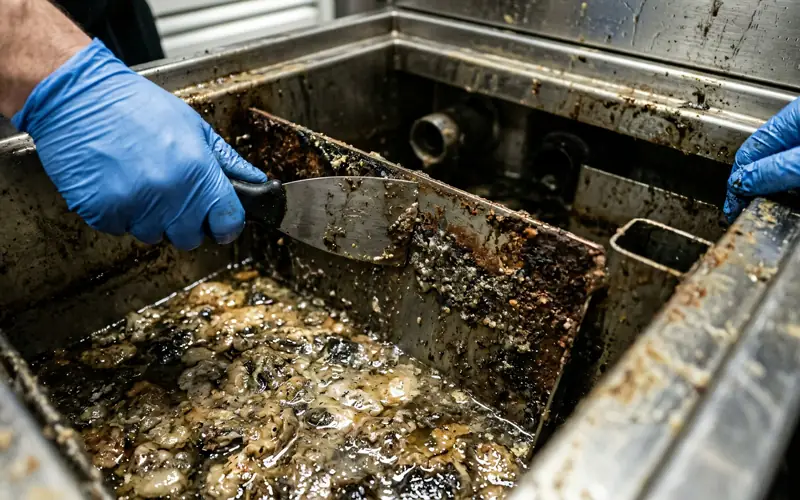
Grease Trap Cleaning
Choose cleaning when residue on trap surfaces or around flow openings needs removal.
Learn more about grease trap cleaning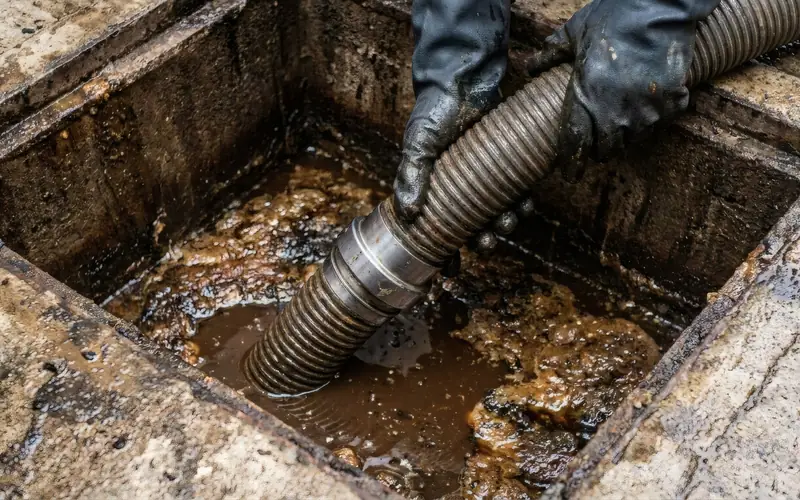
Grease Trap Pumping
Choose pumping when buildup is taking up space inside your grease trap.
Learn more about grease trap pumping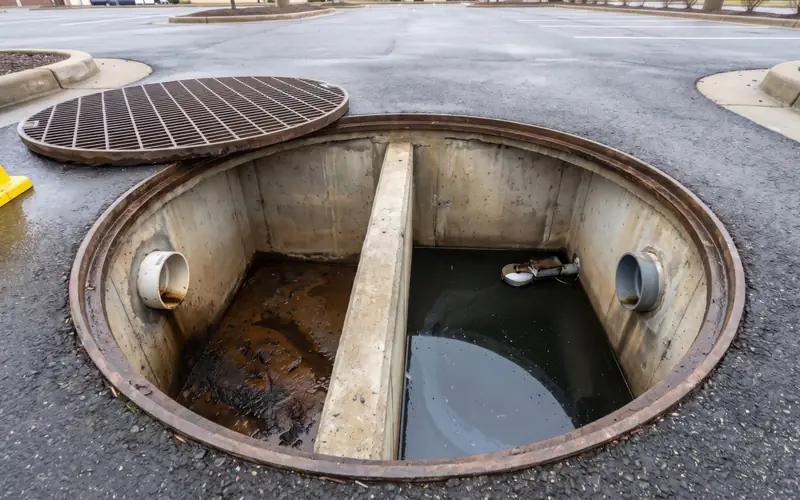
Grease Interceptor Cleaning
Choose interceptor cleaning to clear residue around baffles, tees and tank walls after pumping.
Learn more about interceptor cleaning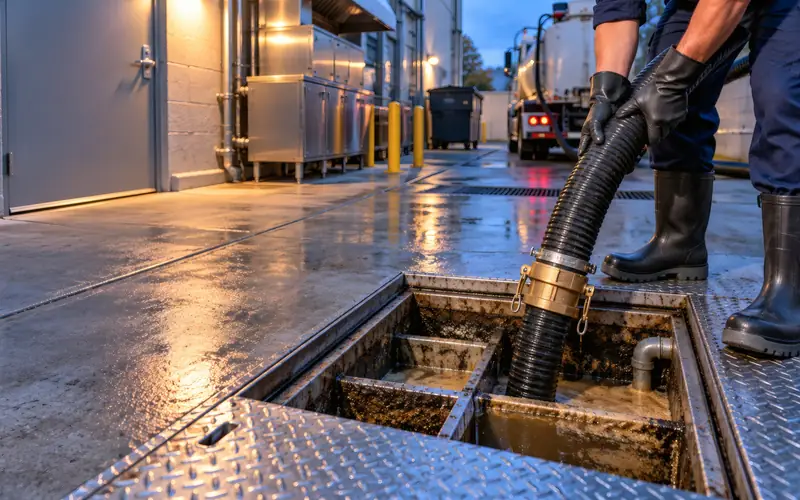
Grease Interceptor Pumping
Choose interceptor pumping when your in-ground tank needs its contents removed by vacuum truck.
Learn more about interceptor pumpingHow the services fit together
Pumping and cleaning are related but not the same job. Grease trap pumping removes the liquid contents of the trap: the floating grease layer, the settled solids and the wastewater between them. Grease trap cleaning goes further, scraping hardened grease from walls and baffles and clearing the inlet and outlet so the trap separates grease properly again. Many kitchens pump on a routine schedule and add a deeper cleaning when buildup or odors return.
Interceptors need different handling because of their size and location. An in-ground interceptor can hold hundreds or thousands of gallons, so grease interceptor pumping is done from a vacuum truck, and grease interceptor cleaning usually involves high-pressure jetting, confined space precautions and an inspection of internal tees and baffles.
You do not need to know which service you need before calling. Describe what you have, how big it is if you know, when it was last serviced and what is happening now. The provider can recommend the right service and give you their price before any work starts.
Find providers in your area →Need Grease Trap Cleaning? We’re Here to Help.
Call to connect with a local provider and discuss pricing and scheduling before agreeing to service.
Call now(626) 416-4511